

Within the framework of the call for Business Projects 2020 of the Ports 4.0 program, one of the most outstanding projects has been the development and implementation of PAULA (Platform for AUtomatically LinKing Agents), a technological solution that has managed to transform port operations in the three ports managed by the Port Authority of Valencia. Promoted by Fundación Valenciaport, Infoport and Híades, the project has successfully addressed one of the major challenges of the port logistics sector: the lack of integration and coordination among the multiple agents involved in ship calls.
Could you briefly describe the project and its main objective?
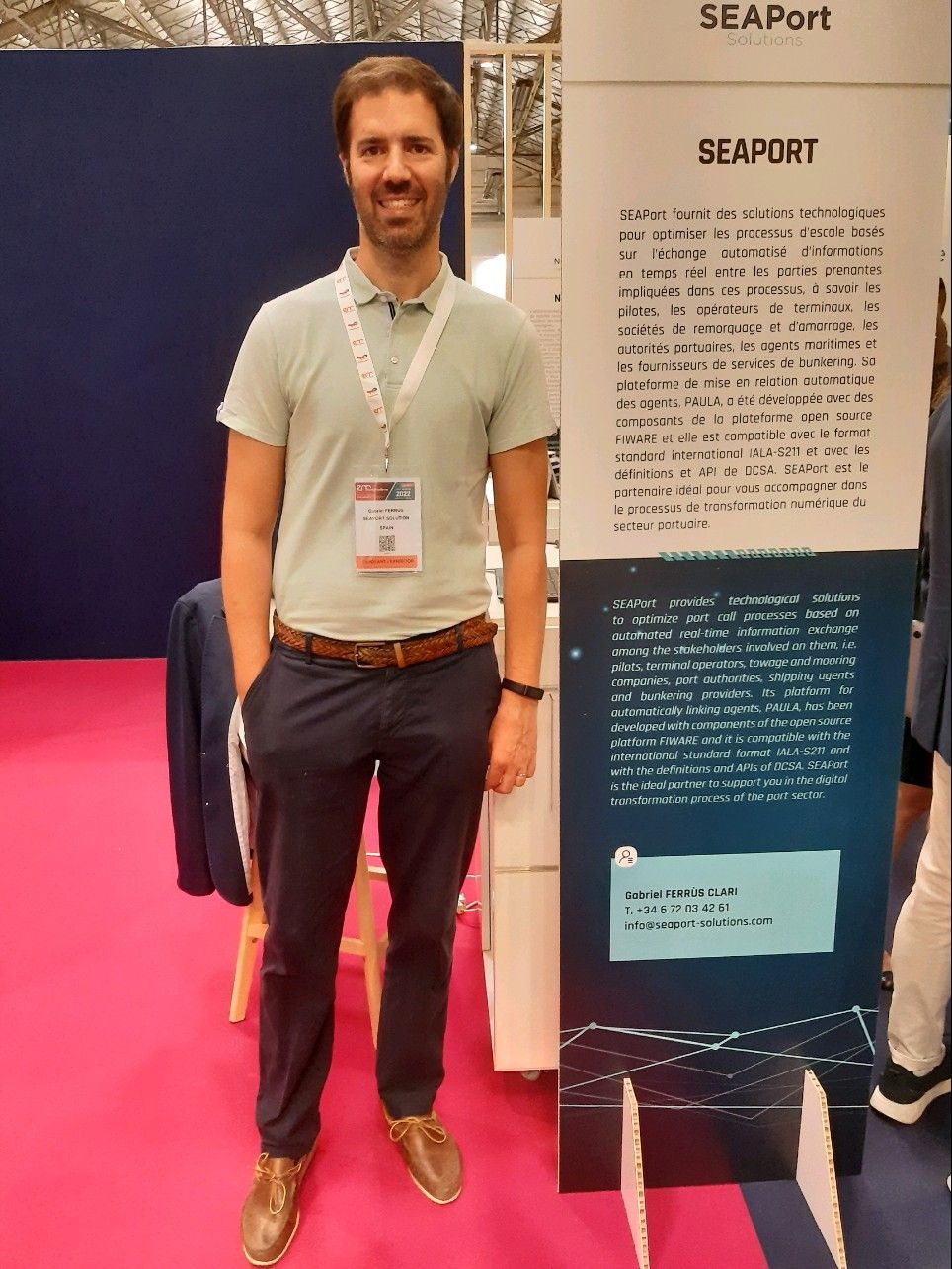
Our project consisted of the deployment and configuration of our technological platform, PAULA (Platform for AUtomatically LinKing Agents), to the reality of the real operational environment of the three ports managed by the Port Authority of Valencia, and which was the facilitating agent, to carry out the digitized exchange of data in real time of the events that occur in the processes of call of ships in port between the different agents involved in them.
What specific problem in the port logistics sector does your project address?
The project addresses the lack of integration and coordination in these processes, which leads to operational inefficiencies, sometimes long waiting times and unnecessary emissions. The platform enables the communication of data in standard formats between key entities in these processes such as pilots, tugboats, traffic control, port authorities, moorers, terminal operators and shipping agents, improving visibility and planning capabilities.
How did the idea for the project come about?
The three partners of the company, Fundación Valenciaport, Infoport and Híades, played a key role in the pilot tests of the PortCDM (Port Collaborative Decision Making) concept, within the framework of the European STM (Sea Traffic Management) Validation project, where it was possible to corroborate the wide margin for improvement of the ship call processes through the digitalization of information exchanges. The work carried out showed that only 40% to 65% of a vessel’s time spent in port was devoted to loading and unloading processes, thus confirming the potential for optimization.
What were the main challenges you faced during the development of the project?
At the technical level, we had to integrate various systems and actors of the port ecosystem with different levels of digitalization and overcome some resistance to change in traditional communications models, and we also faced the need to ensure the interoperability of the platform with international standards such as IALA-S211 and DCSA.
At the operational level, the main challenge was to involve as many entities as possible, as this type of collaborative platform requires the participation of the entire port community so that data biases are minimized and everyone has access to the relevant information to optimize the decision-making process and reduce inefficiencies.
What innovative technologies or methodologies did you use?
PAULA is a PortCDM (Collaborative Decision Making) platform for real-time data exchange based on industry standards. The system ensures that information is available and visible to all involved and authorized agents in real time, through the specified access management, thus providing a complete and dynamic view of the port call process, enabling better coordination and decision making, and optimal resource management.
What concrete results has the project achieved so far?
Thanks to the program, PAULA was implemented in the main Mediterranean port and achieved a TRL 9, and tangible benefits could be demonstrated in the access to accurate information in real time allowing the identification of areas for improvement in the provision of services.

How has the project improved efficiency or sustainability in the port sector?
Through access to real-time data, coordination between the different actors in the port ecosystem is optimized, increasing the overall efficiency of the processes of port calls, minimizing inefficiencies and downtime, and reducing the environmental impact of port services.
Do you think the project has potential to be scaled up or replicated in other ports or sectors?
Yes, PAULA has a high potential for scalability and replicability. Its modular design based on international standards allows its implementation in other national and international ports, adapting to different idiosyncrasies and operational needs.
In fact, the platform has also been deployed and tested in Portos do Paraná in Brazil and in the port of Quetzal in Guatemala.
What advice would you give to other entrepreneurs or innovators who are considering participating in Ports 4.0?
I would recommend that they talk to and consult with companies in the industry and focus on solutions that address real day-to-day problems. It is important that they try to work closely with key players in the port ecosystem who are open to employing disruptive technologies to improve their operations.
How do you think the Ports 4.0 grants have contributed to the success of your project?
The program grants are very important to cover part of the development costs in emerging companies like ours (start-up), and especially, they allow us the implementation in real environments and the collaboration between different actors of the sector. This support has been key to reach the level of technological maturity necessary for our success.


